
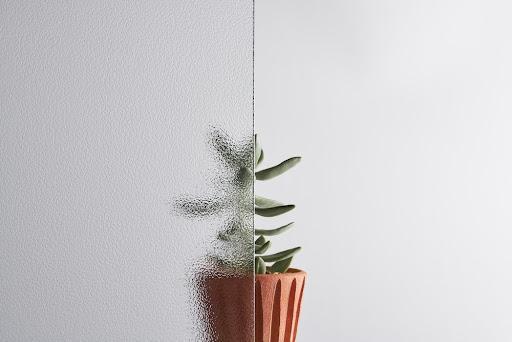
While privacy and natural light often seem like opposing forces, a solution has emerged: switchable glass. Also known as smart glass or PDLC glass (Polymer-Dispersed Liquid Crystal), this cutting-edge technology is fundamentally changing how we interact with our windows, doors, and interior partitions.
Simply put, switchable glass is an electrically activated material that can instantly change its visual state, from transparent (clear) to opaque (private) with the flick of a switch, a tap on a remote, or even a voice command. It offers an elegant, modern, and high-tech alternative to traditional blinds and curtains, blending form and function to give you complete privacy on demand.
How Does Smart Glass Work?
Imagine your glass has a secret filling inside: a very thin, special film or layer of liquid crystals. This is what makes up the PDLC technology.
When the system is switched off and no electric current is applied, these liquid crystals are naturally disordered (randomly scattered). When light hits the glass, it is dispersed by the crystals, causing the glass to appear opaque.
If a low-voltage electric current is applied, it causes the liquid crystals to instantly align in a parallel, organized fashion. This alignment allows light to pass straight through the glass with minimal scattering, making the glass look clear and transparent.
Control Options
The switching mechanism is incredibly versatile and can be integrated into nearly any modern smart system, including:
- Standard Wall Switches: The simplest and most common control.
- Remote Controls: Offers convenience from anywhere in the room.
- Smartphone App/Tablet: Allows integration into a larger smart home ecosystem.
- Voice Control: Modern systems can be activated through platforms like Alexa or Google Assistant.
Benefits and Applications of Privacy Glass
Switchable glass is far more than a fancy window; it's a dynamic design feature that delivers tangible benefits for both your lifestyle and your energy bill. Giving you immediate control over your environment, it solves common design dilemmas with high-tech style.
Privacy On Demand
This is the core appeal for most homeowners and businesses. With the flip of a switch, your space transforms from open and visible to completely private. No more struggling with dusty blinds, tangled cords, or faded curtains!
Modern Aesthetics and Light Flow
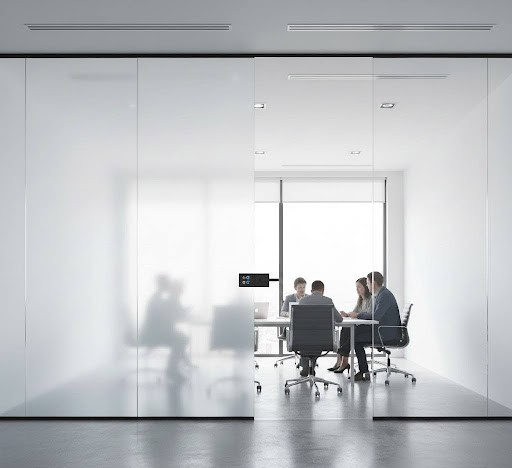
Switchable glass eliminates the need for bulky window treatments, maintaining clean, minimalist lines in your design. Even in its opaque state, the glass still allows diffused light to enter, meaning you get privacy without plunging the room into darkness.
Energy Efficiency and UV Protection
The special PDLC film naturally blocks up to 99% of harmful UV rays in both its clear and opaque states. This protects your furniture, flooring, and artwork from fading.
By switching the glass to opaque during the hottest part of the day, you reduce the amount of solar heat (infrared light) entering your space. Your room will then be much cooler, reducing air conditioning costs in turn.
Ideal Applications
Switchable glass can be used anywhere you need to manage light, space, or privacy.
|
Location Type |
Problem Solved |
|
Bathrooms |
Instant, complete privacy for shower enclosures or large windows without humidity issues (unlike fabric curtains). |
|
Home Offices |
Create a private, quiet focus zone within an open-plan layout; switch it to clear for an open feeling after work. |
|
Conference Rooms |
Transition instantly from a collaborative, transparent workspace to a private, confidential meeting space. |
|
Glass Partitions |
Replace solid walls in open-concept homes or offices to separate spaces while maintaining natural light flow. |
|
Front Doors and Skylights |
Control who can see in (or reduce glare from overhead) while keeping a modern, clean look. |
Switchable Privacy Glass Types and Options
If you're ready to introduce switchable glass into your project, you have several options catering to different needs and budgets.
Technology
While the most common version switches from clear to opaque, performance can vary significantly:
- Transparent to Opaque: This is the classic smart glass. It provides the maximum amount of visual privacy when opaque, while still allowing natural light to diffuse into the room.
- Transparent to Tinted/Colored: Some switchable glass offers the ability to change to a specific color or shade (such as blue or gray), which can be used for aesthetic purposes or to enhance solar heat control further.
- SPD (Transparent to Shaded): This is another type of smart glass called Suspended Particle Device (SPD) glass. Instead of providing full privacy, SPD glass uses tiny particles to control solar heat and glare. It can be dimmed from clear to a deep tint, maintaining your outdoor view while dramatically reducing brightness and heat.
- Transparent to Clear (Non-PDLC): Thermochromic glass technologies change the tint or shade of the glass to control heat and light, often used in large exterior windows. They generally do not provide complete visual privacy like traditional PDLC glass.
- CLiC Glass: This advanced brand of glass has a film-free structure that uses superior liquid crystal material. It is a top-tier choice known for its unmatched clarity and elimination of the haze often associated with older PDLC systems, offering a truly crystal-clear view when switched on.
Size and Thickness
The dimensions of switchable glass are customized for almost any application. Modern technology allows for large, seamless panes that cover entire walls or conference rooms.
Glass unit thickness will be comparable to standard windows (often between 1/4" and 1/2"), but it must be integrated with the specific electrical requirements of the film.
Cost Considerations for Switch Glass
Switchable glass represents a premium, custom technology, meaning the initial investment is significantly higher than standard glass or traditional window treatments.
Price Range
Cost is typically determined per square foot and varies based on several factors. Generally speaking, the higher price reflects the specialized manufacturing, quality of the PDLC film, and required electrical components.
Specialty window shapes, very large dimensions, or features like integration into a complex smart home system will push the price higher.
Return on Investment
Despite the higher up-front cost, it's equally important to assess long-term return on investment (ROI). Switchable glass offers more than just convenience; remember that it also provides significant energy savings by blocking harmful UV rays and reducing solar heat gain when switched to opaque. This helps maintain cooler indoor temperatures in the summer, directly lowering air conditioning costs over time.
What's more, installing such a high-tech, permanent feature is considered a high-value property upgrade that can potentially increase your property's market value.
Switchable Glass Installation Process

Installing switchable glass is a process that requires precision and expertise. This is not a DIY project, as the successful function of the product depends entirely on proper electrical integration and handling of the glass.
Professional Installation Requirements
Because switchable glass operates on electricity, the installation process must be handled by window professionals who are knowledgeable in both glass installation and electrical systems. Here, the glazier (tradesperson who installs, cuts, and fits glass in windows) must carefully install the sealed unit into the frame while ensuring the power connection leads are routed correctly.
Improper installation can lead to film delamination (when the PDLC film separates from the glass surface) or electrical failure, making the glass permanently stuck in one state.
Timeline Expectations
The installation timeline is generally divided into two phases. The manufacturing phase can take several weeks, as the glass units or films are custom-made to your exact measurements.
Conversely, the on-site installation phase itself is usually quick. Depending on the complexity and number of panes, a professional team can often complete the wiring and physical installation in a single day or two.
Integration with Existing Electrical Systems
Electrical integration is arguably the most critical step. While PDLC film requires only a very low-voltage current to switch, the system still needs a dedicated power transformer (or power supply unit) to convert your standard voltage down to the required level. This transformer is typically hidden in a nearby wall, ceiling, or cabinet.
The professional installer will make sure that the wiring is discreetly run from the power unit to the glass pane, which is the final step in making your new switchable glass functional.
Note that integration with existing smart home electrical systems may require a licensed electrician and add a bit of time to the project.
Maintenance
One of the great advantages of switchable glass is its low-maintenance nature compared to traditional window coverings. Since there are no moving parts, cords, or fabric, upkeep is minimal.
Cleaning and Care
Cleaning switchable glass is just like cleaning any standard window. Use a soft, non-abrasive cloth or sponge with a mild, non-ammonia-based glass cleaner. Crucially, you must avoid sharp objects or harsh, abrasive chemicals that could scratch the glass and damage the film.
Be cautious when cleaning the edges to be sure the seal around the electrical leads remains intact!
Expected Lifespan
Switchable glass technology is designed for durability and a long service life. The lifespan of high-quality PDLC film is typically measured in switching cycles and operating hours.
Most manufacturers rate their glass for over 3,000,000 on/off cycles. For normal residential or office use, this effectively means a near-lifetime of reliable switching; you can generally expect the glass unit to last well over 50+ years, often matching the lifespan of the building itself (provided the electrical components remain functional).
Warranty Information
Because this is a specialized product, warranty information is very important. Look for comprehensive warranties that cover both the glass unit itself (against issues like fogging or seal failure) and the electrical functionality.
Warranties typically range from 5 to 7 years for the electronic function, and often longer for the glass seals. Always confirm the exact terms regarding installation, as a warranty may be voided if installation is not performed by a certified professional.
Make the Switch with Hodges
Tired of dated blinds and bulky drapes? As Northern Virginia's trusted installation specialists, Hodges Windows and Doors is ready to bring this revolutionary technology to your unique space. Schedule a no-obligation estimate and step into the future of design!
